
Semi Precious Stones
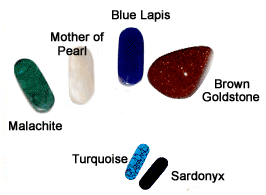
Minerals and metals were identified with specific gods, spiritual and therapeutic values. The words for lapis lazuli and turquoise were synonymous with joy and delight, respectively.
Turquoise was used as a valuable ornament by the Egyptians thousands of years ago. The color is of course, turquoise, but this color actually varies from greenish blue to sky blue shades. The only gemstone belonging to the phosphates, it is a hydrous phosphate of aluminum with a small percentage of copper giving it the blue coloring. When associated with iron the color tends to be greenish. The best turquoise is deep blue and even in color. Metaphysical Properties- it is associated with the sky, and bringing sky energy to earth. It can help promote honest and clear communication from the heart. It is also said to protect against pollution in the environment, and to bring abundance. -Turquoise can also help speed the healing process, and is known as a master healer stone.
Blue Lapis or Lapis LazuliLapis lazuli is one of the oldest of all gems, it was used by Sumerians and Egyptians in 3000 B.C. Top quality lapis is a strong blue, lapis cabochons sometimes with a hint of violet. The value of lapis decreases with the presence of white patches (calcite),but small veins of pyrite can increase the value (presence of pyrite is often a personal preference). The finest lapis lazuli comes from Afghanistan where it has been mined for centuries. Deep blue in color and opaque, this gem was highly prized by the pharaohs of ancient Egypt, as can be seen by its prominent use in many of the treasures recovered from pharaonic tombs tombs.
Black SardonyxOnyx, sard, and sardonyx are all varieties of the micro-crystalline quartz, chalcedony. A variety of quartz in crystalline form of calcium carbonate. It is characterized by a structure of parallel bands each differing in color or in the degree of translucency. Onyx was the ancient birthstone for the month of July.
Mother of Pearl
The pearl lining of an oyster. Only mollusks that have this lining can produce pearls. Nacre - which is a silky substance secreted over a forming pearl. Layer after layer of nacre build up to form what we call a pearl. When light touches the pearl, it travels through all the layers of nacre, and each tiny crystal reflects the light like miniature prisms.
Malachite
An opaque semi-precious stone with layers of deep green and light green. It is usually found in copper mines; malachite is about 57% copper. Malachite was used as jewelry thousands of years ago by the ancients Egyptians.
Goldstone (Brown) - sometimes called Moonstone or aventurine glass is a type of glittering glass made in a low-oxygen reducing atmosphere. The original manufacturing process for goldstone was invented in seventeenth-century Venice by the Miotti family. Legend says goldstone was an accidental discovery by unspecified Italian monks or the product of alchemy.
|

Cairo, Giza, Pyramids Egypt Cairo Phone 011- 2-02-3780-6889 Mobile 011-2-02-012-233-4112 From Cairo with Love is a registered trademark. All rights reserved 2025. No part of these pages may be copied, reproduced or distributed without express written consent. |
